
Conrad Hilario | Dennis McCallum | John Ross
In most American churches, leaders feel disappointed by members’ lack of interest in developing personal ministry. Many members don’t have a category for personal ministry and can’t understand why people would exert energy to win disciples or develop other consistent outlets to build up the body of Christ.
At Dwell, we see a different picture. Our leadership has stressed the importance of every-member ministry and lay leadership. This has created a hunger among our members to engage in ministry. Even younger members desire to win lost people and help newer Christians become disciples of Christ. Our members relish the idea of spending numerous hours every week meeting with younger believers for study, sharing and prayer.

Many across our country and in our own fellowship feel grief and moral outrage over the racism and moral injustice we’ve seen just in the last few months.
Some of you feel a mixture of anger, fear, and exasperation. Anger: because you have experienced racism and injustice firsthand. Fear: because you worry for your own life and the lives of your friends and family. Exasperation: because you feel like it keeps happening and nothing is changing.
During Jesus’ life, he often used Scripture to express how he felt. As the executioners fastened him to the cross, Jesus cried out the first line of Psalm 22 to express his feeling of god-forsakenness. “My God, My God, why have you forsaken me.” Recently, I stumbled upon a verse that expresses the anger many of you feel right now. “Though I cry, ‘Violence!’ I get no response; though I call for help, there is no justice” (Job 19:7).

I just completed Jonathan Haidt’s book Happiness Hypothesis: Finding Modern Truth in Ancient Wisdom. I found myself agreeing with a lot of what Haidt says in the book. Haidt regularly draws insights about happiness from the Bible and other world religions, even though he self-identifies as agnostic. The strength of Haidt’s book comes from the breadth of his research, spanning studies in neurobiology to sociology. Haidt does best when he’s describing cognitive distortions or citing research that correlates mental well-being with a certain behavior or perspective. I consistently find that many of the books about cognitive therapy suggest remedies that overlap with biblical wisdom.

I invited guest contributor, Nick Hetrick, to share some thoughts from a two-part talk entitled “Taking Your Thoughts Captive,“ which he and Chris Risley gave at our annual conference Xenos Summer Institute. Nick completed his PhD in English at The Ohio State University and serves as a counselor and Bible teacher in our church. In his essay, he tackles the confusing topic of the divided self. On the one hand, we have strong impulses and feelings. On the other, God calls on us to exercise self-control and to take our thoughts “captive to the obedience of Christ.“ Nick’s article explores this tension. Stay posted for the second installment from Chris Risley, which I will publish in the next couple weeks.

In the 1930’s, more than twenty people lost their lives during the construction of the Golden Gate Bridge in San Francisco. Toward the end of its construction, they hung a net below the bridge. From that time on, they never lost another person. But the interesting part was this: worker productivity increased by nearly thirty percent after suspending that net below the bridge. Why did productivity increase? They weren’t worried about dying, which freed them to focus on what they were supposed to be doing. In the same way, God motivates us to live for him by eliminating the fear of punishment.

Last month, my wife was organizing a room filled with junk in our house. Often these attempts to declutter just spread junk from one room to others throughout my house. Yet, sometimes items surface during these purges that remind me of important events in my life.
Someone took this picture of me twenty years ago while speaking at a Youth for Christ fundraiser. It was the first time I spoke in public. I was sharing how I came to Christ with a small crowd, maybe 20-30 people. As I spoke, I felt God’s spirit animating my words. This was the first time I can recall God empowering me in this way. If you told me twenty years ago that I would speak for God as my full-time job, I would’ve laughed in your face.
Looking back on my life, God has led me through a circuitous path to bring me where I’m at today...

I’ve been working on a new writing project about our new identity in Christ. I recall how learning about my new identity revolutionized my relationship with God. This book will attempt to unpack 30 New Testament identity truths in the form of a 30 day devotional. I’m trying to keep each chapter short so you can spend time meditating on how each identity truth should impact your life. Here’s a sample chapter entitled “Aliens and Strangers,“ which details how we should lives as temporary residents passing through this life.

Here’s another sample chapter from my new writing project on our new identity in Christ. Here’s a short clip from the text:
When Jesus wrote to the church at Sardis, he promised those who overcome temptation, “I will never blot out his name from the book of life, but will acknowledge his name before my Father and his angels” (Revelation 3:5). Ancient cities recorded their citizens’ names in a registry. Upon their death, city officials would blot the citizen’s name from the registry.
Some evidence suggests ancient cities would remove a citizen’s name if they found him guilty of a crime. In the first century, persecutors would brand unwavering Christians “political rebels” and strip them of their citizenship. But Jesus offered them something no earthly authority could strip away, citizenship in God’s everlasting kingdom.

Recently, I picked up Jean Twenge’s provocative and eye opening book iGen: Why Today's Super-Connected Kids Are Growing Up Less Rebellious, More Tolerant, Less Happy--and Completely Unprepared for Adulthood--and What That Means for the Rest of Us. As a parent and someone who works with high school/college-aged people, this book provides staggering insights. Among other things, It demonstrates a powerful correlation between screentime and unhappiness. Here a segment from her book:
“Many people have argued that teens’ communicating with their friends electronically is no big deal—they’re connecting with their friends, so who cares how they do it? In this view, electronic communication is just as good as in-person communication. If so, it would be just as good for mental health and happiness: teens who communicate via social media and text should be just as happy, be just as likely to dodge loneliness, and be just as likely to avoid depression as teens who see their friends in person or engage in other activities that don’t involve screens.
We can find out if that’s true. Let’s start with happiness. The MtF surveys ask teens how happy they are in general (“very happy,” “pretty happy,” or “not very happy”) and also how much time they spend on various activities during their leisure time, including both screen activities such as social networking sites, texting, and Internet time and nonscreen activities such as in-person social interaction, exercise, and print media. Thus we can see which activities create joy and which are more likely to lead to misery.
The results could not be clearer: teens who spend more time on screen activities (the black bars in Figure 3.5) are more likely to be unhappy, and those who spend more time on nonscreen activities (the gray bars) are more likely to be happy. There’s not a single exception: all screen activities are linked to less happiness, and all nonscreen activities are linked to more happiness.”

Our circle of friends keeps shrinking. According to sociologist Lynn Smith-Lovin, nearly 50% of Americans report they discuss important matters with either one person or no one at all. And this includes family members!
In recent decades, the number of people who say they can turn to at least one non-family member dropped from 80% to 57%. Even more concerning, those who reported they had no one to talk to about important matters nearly tripled.
To most, the need for friendship appears self-evident. Yet, some of us have lived in isolation for so long that it’s hard to see the urgency in building them. Let me provide three reasons why we need friendship.
First, God designed the need for friendship into our human architecture. According to the Bible, the first man enjoyed perfect fellowship with God. And yet, God saw man’s longing for human connection. In Genesis 2:18, God declared, “It’s not good for man to be alone.” In fact, new research links loneliness with a higher risk of death. Brigham Young University released a study showing that feelings of isolation increased the risk of death by 26%. Even worse, living alone increased a person’s risk by 32%.
Second, following Christ requires us to love people and build close friendships. Sometimes you’ll hear people say, “I’m good with God, but I really don’t like people.” That’s impossible. According to the Bible, you can’t claim to love God and fail to love people (1 John 4:7, 8). If you love God, then you will adopt his love for people.

I wrote this article about 10 years ago. I’m surprised by its relevance today. We live in a time where many hold a pragmatic view of truth. As a result, it’s even more urgent for us to set a firm foundation for our faith by learning and using apologetics.

Within recent years a movement has been “emerging” within Christianity promising to repaint the Christian faith. The leaders of this movement depict modern Christianity as a rigid, dusty orthodoxy, filled with endless dogmas and doctrines. According to their perspective, true Christianity must be understood as fluid, changing, and being reworked to throw off the straitjacket of doctrines restricting its modern relevance. Among these doctrines being reworked is the Christian teaching of substitutionary atonement –the belief that Jesus died to pay humanity’s moral debt to God.

During the mid-1800s, the state of Tennessee divided over the issue of slavery. Most of Western Tennessee sided with the Confederacy and wanted to separate from the Union.
On the other hand, people from Eastern Tennessee didn’t depend on farming and agriculture, since they lived in a mountainous area. Therefore, they didn’t rely as much on slave labor. Therefore, they supported the Union.
Following the Union surrender of Fort Sumter in 1861, Tennessee broke away from the Union. Immediately after Tennessee split from the Union, Eastern Tennessee petitioned to break away from Tennessee. But the state legislature denied their request to break off from the state of Tennessee and sent Confederate troops into Eastern Tennessee to prevent them from splintering.
So the Union supporters in Eastern Tennessee went underground. Many Eastern Tennesseans engaged in guerrilla warfare, burning bridges, cutting telegraph wires, spying for the North and supplying soldiers for the Union army. Eventually, Union troops liberated Tennessee from Confederate control in 1863.
In a lot of ways, we’re like the citizens of Eastern Tennessee. We live in a world that’s in a state of rebellion against God. The world questions the legitimacy of God’s authority to rule.

Photo credit: Rick White
This short TED talk sheds some light on a phenomena called negativity bias. Negativity bias refers to “the tendency for humans to pay more attention or give more weight to negative experiences over positive ones.”
Alison Ledgerwood, professor of psychology at UC Davis, argues that once you view things in a negative light, it takes work to get unstuck.
As I watched this video, my mind was instantly cast toward the dangers of ingratitude and discouragement in ministry. Or to put it positively, Ledgerwood’s talk underscored the importance of expressing gratitude and training our mind to dwell upon the good things God has done (Philippians 4:8).

When the Roman general Scipio Africanus defeated Hannibal and conquered Carthage during the Punic Wars, it is said that he sowed salt into the fields so nothing would ever grow again. I’ve encountered discouraged Christian workers and leaders who view serving Christ as similar to cultivating a Carthaginian field.
Under these conditions, we may feel tempted to bend our theological emphasis to fit our discouragement. Often, we couch our discouragement with spiritual sounding statements such as, ‘We’re just too “results focused” or “fruit centered.”’ How do comments like this fit with some of Jesus’ statements in the Gospels?

After nearly twenty years of following God, I still find myself returning to books and studies that gave shape to my walk with God. As a fairly young Christian, my men’s small group spent an entire night unpacking these short statements from William R. Newell’s commentary Romans Verse-by-Verse.[1] We spent nearly two hours evaluating each of these pregnant statements to determine if agreed with them. As a nineteen year old, fresh out jail, most of the discussion flew over my head. However, what little I absorbed made a lasting impact on my walk. Periodically, I stumble upon these statements as I read foundational books with young Christian believers. Each time, I find a growing level of agreement with each of these statements.

We often view waiting on God as a form of suffering. We tell ourselves, “God isn’t answering my prayers.” But if God calls us to cultivate daily dependence upon him, then we would recognize that few things can bring us closer to God than waiting on him. I found the following quotes from Andrew Murray’s book, Waiting on God, particularly helpful in seeing the value of waiting upon God.
At our first entrance into the school of waiting upon God, the heart is mainly set on the blessings which we wait for. God graciously uses our needs and desires for help to educate us for something higher than we were thinking of. We were seeking gifts; He, the Giver, longs to give Himself and to satisfy the soul with His goodness.

Caption: Chris Froome (left), Geraint Thomas (right)
Most professional cyclists spend their entire careers sacrificing their ambitions while helping others attain theirs. The cycling world refers to these riders as domestiques, which means "servants" in French. They place themselves in service of their team leader. Domestiques' responsibilities include falling back to the team car to grab water bottles and food for their team leader, protecting their leader from the wind by allowing him to ride in their slipstream (saving him about 30% of his energy by drafting), and giving their bike or wheel to their team leader if he has a mechanical issue. Domestiques rarely win a professional race throughout their career. But something unusual happened in this year’s edition of the Tour de France, the world's most demanding endurance race.[1]

2 Samuel 11 marks a tectonic shift in David’s life. Bible teachers observe that David was a different man after his fall with Bathsheba. Beforehand, God seemed to bless everything David did. But after his fall, it seemed like turmoil and opposition filled his life.
Most of the time, we look at this passage as a guide for how to respond when you’ve fallen into sin. But I want to look at this passage from a different angle. I’m interested in looking at this passage from the standpoint of Dangers Leaders Face.
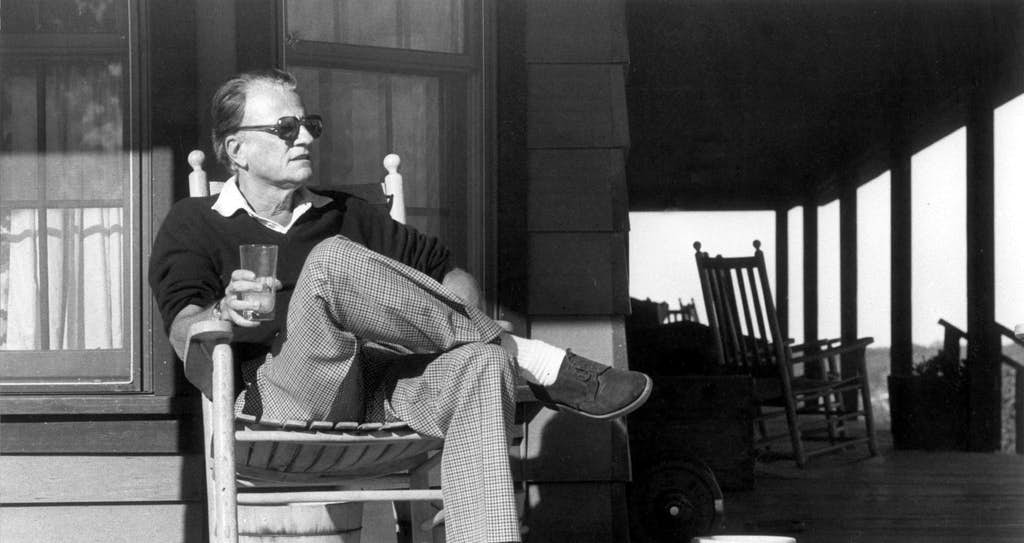
As Billy Graham neared the end of his life, he expressed a few of his biggest regrets. I found them challenging and instructive. Some of our drives and ambitions may lead us on a course we will regret later in life. I’m struck by how many of Graham’s regrets center around his relationships, both with God and his family. Despite some of these missteps, Graham powerfully impacted the world for Christ.

Visitors who attend our annual Xenos Summer Institute often comment about the myriads of young people in our church. It's certainly one of the unique things about Xenos. From 2010-2015, our church saw a surge of growth among college and high school-aged people. Today, more than 60% of the people attending our church are college-aged or younger. That's over 3000 people under the age 30. As a result, we've learned some things about working with younger people.
Recently, I began reading a book entitled Behave by Robert Sapolsky (an American neuroendocrinologist and professor of biology/neurology at Stanford University). In his chapter, "Adolescence; or Dude, Where's My Frontal Cortext?" Sapolsky supplies scientific evidence which confirms some of the things which I've learned while working with younger people.

Photo Credit Charles Rex Arbogast
We get a brief surge of excitement when we tear open the package containing our new device. Or a wave of euphoria hits us when we hand a sales associate our credit card to purchase a new pair of shoes. Yet, these feelings quickly evaporate. We long to experience that rush again. So we buy even more.
But over time, nothing we purchase can mask the emptiness we feel. Money and possessions will never leave us feeling full because we’re trying to fill what Blaise Pascal called the “infinite abyss.” God designed us to be in a relationship with him. Only he can satisfy what’s missing.

Photo credit Rick White
Many years ago, Robert Rosenthal conducted an educational study were he discovered what we now call the “Pygmalion Effect.” In this study, researchers told one group of teachers that their students were exceptionally bright. Their IQ scores were far superior to that of normal students. They might act lazy at times and they might act like they cannot understand or master some material, but this didn’t fit with the facts. They had a profound capacity for learning and success. Researchers gave another group of teachers a very different perspective of the students they would be teaching. Their students weren’t that bright. Their IQ scores weren’t that high. Although some might show promise, they possess a lower capacity to learn.

Photo credit Camille Seaman
We have been reminded many times by many preachers that, if God took the Holy Spirit out of this world, much of what the church is doing would go right on, and nobody would know the difference. God is not going to remove His Spirit from His people, but there is a danger: we may become so accustomed to working without his power that, when he does start to work, we will resist him. There are so many counterfeit spirits in our world that even the elect are sometimes deceived.
It was not enough for our Lord Jesus to possess a holy nature; he also needed the Holy Spirit. He knew the Holy Scriptures; he still needed the Holy Spirit. In his first sermon he proclaimed, "The Spirit of the Lord is on me…" (Luke 4:18). Would that every minister of Jesus Christ could make that affirmation!

Our mindset plays a critical role in our spiritual growth and development. That's why the Bible spills considerable ink, talking about where we should or fix our minds. Paul’s concept of setting our minds on the things above closely relates to the concept of abiding in Christ (John 15:1-5). Abiding in Christ requires both acknowledging God's presence and depending on him throughout the day.
Now some may ask, “How can I turn my attention to the things above when things like work, school, or taking care of children occupy most of my attention?” Three things come to mind.

Photo credit Alejandro Cegarra—Getty Images Reportage
As we undergo suffering, it’s natural to ask ourselves or God. “Why is this happening?” We need to wrestle with this question. But often the answers to this question remain hidden from sight till years later. And often the complete answer doesn’t become available this side of eternity. But sometimes we insist God tell us “why.”

Photo credit: Jason Wawro
Scripture gives us our moral bearing. It orients us to what’s right and wrong. For example, Paul says, ‘I would not have come to know sin except through the Law; for I would not have known about coveting if the Law had not said, “Do not covet”’ (Romans 7:7). If God didn’t reveal his moral will, we would stagger from sea to sea searching for it. Yet, we would never find it.
Sin has damaged our moral compass. We need an external objective reference point whereby we can judge our thoughts, attitudes and actions. When pilots fly in poor weather conditions, they’re prone to what flight experts call “spatial disorientation.”

First Samuel gives us one of the best examples of friendship in the Bible, the friendship between David and Jonathan. Their relationship rested upon a solid spiritual foundation.
David and Jonathan’s friendship captures the type of love you should see in your spiritual friendships.
Sadly, death caused a temporary disruption to David and Jonathan’s friendship. Jonathan lost his life in battle alongside his father.

Photo Credit Joan Cornella
Nearly twenty years ago, I read The God Who is There. Schaeffer wrote this book 50 years ago in 1968 at the height of the Counter Culture Movement. This book greatly influenced my thinking.
Specifically, I remember this staircase diagram which describes how people view truth. Schaeffer argued that shifts in the way man views truth starts with the intellectuals and slowly trickles down to the artist, the musician, general culture and lastly to the theologian. Schaeffer points out that, “Theology has been last for a long time. It is curious to me, in studying this whole cultural drift, that so many pick up the latest theological fashion and hail it as something new. But in fact, what the new theology is now saying has already been said previously in each of the other disciplines.” This statement still holds true today.
Image Credit: Dadu Shin
Mental health issues in America have growing at a staggering rate. During the 90’s when I was a teenager, most of my friends and peers were unhappy. This all changed with the Millennial Generation. Those who reported feeling “very happy” increased significantly among Millennials. And yet, we see that there’s been precipitous drop in happiness among people born after 1995.
In a major survey administered by the American Collegiate Health Association, college students are now more likely to say they feel overwhelming anxiety and that they felt so depressed they could not function.[1] Many experts believe we’re in the middle of the worst mental health crisis in decades with teen depression and suicide skyrocketing since 2011.